
5 TIPS FOR A GREAT MILONGA
Tango is built on connection, rewspect and consideration.
Follow these 5 simple principles to keep the floor safe, kind, and enjoyable for everyone:
01 — Invite with respect
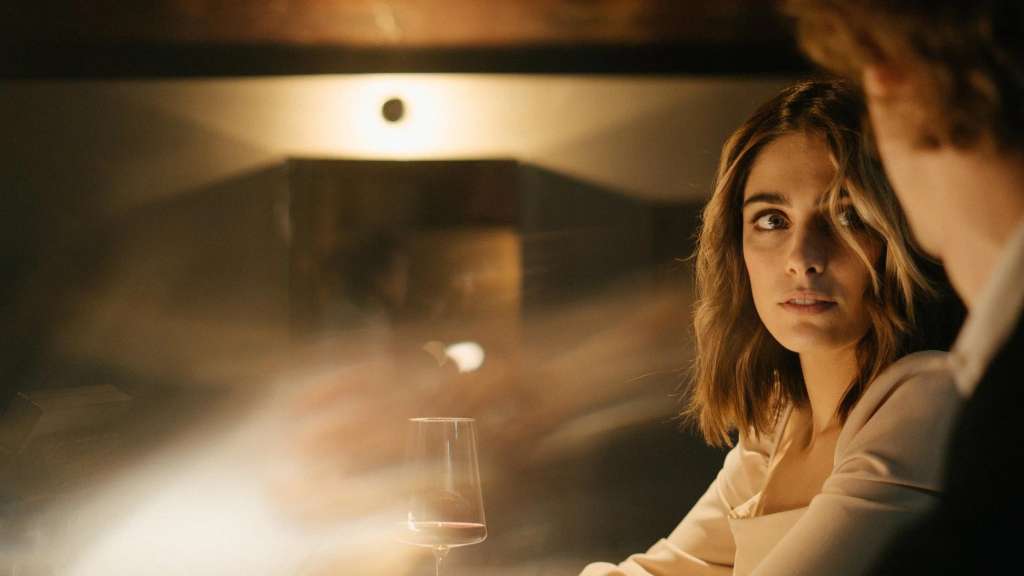
In Argentine tango, an invitation to dance is more than a question — it’s the beginning of a shared experience.
Traditional customs such as mirada (eye contact) and cabeceo (a subtle nod) allow dancers to invite and accept a dance discreetly, without putting anyone on the spot.
Every invitation is a choice. A yes is lovely, and a no is perfectly fine too. There’s no need to explain a refusal, and no reason to take one personally.
Approach every invitation with warmth, accept every response with grace, and remember that a comfortable dance begins before the music starts.
02 — Dance with care
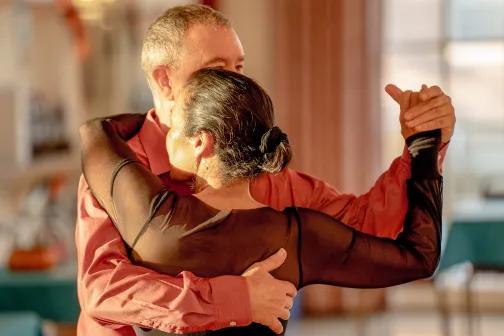
Tango is a conversation between two people, built on trust, awareness and mutual respect. The best dances aren’t necessarily the most technically impressive — they’re the ones where both partners feel comfortable and connected.
Be attentive to your partner’s experience, embrace and personal boundaries. Adapt your movements to the person you’re dancing with, the music and the space around you.
A milonga is a place to enjoy dancing together, not to correct or teach one another. Unless advice is specifically requested, leave the teaching for classes and practicas.
Dance with your partner, not at them. Consideration is every bit as important as technique.
03 — Share the ronda
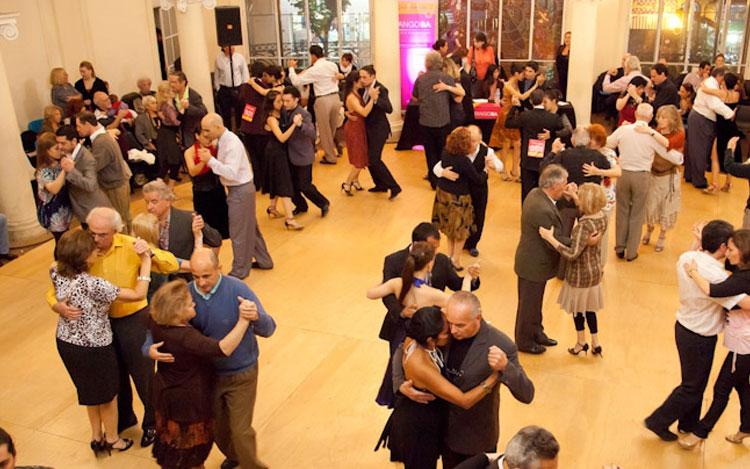
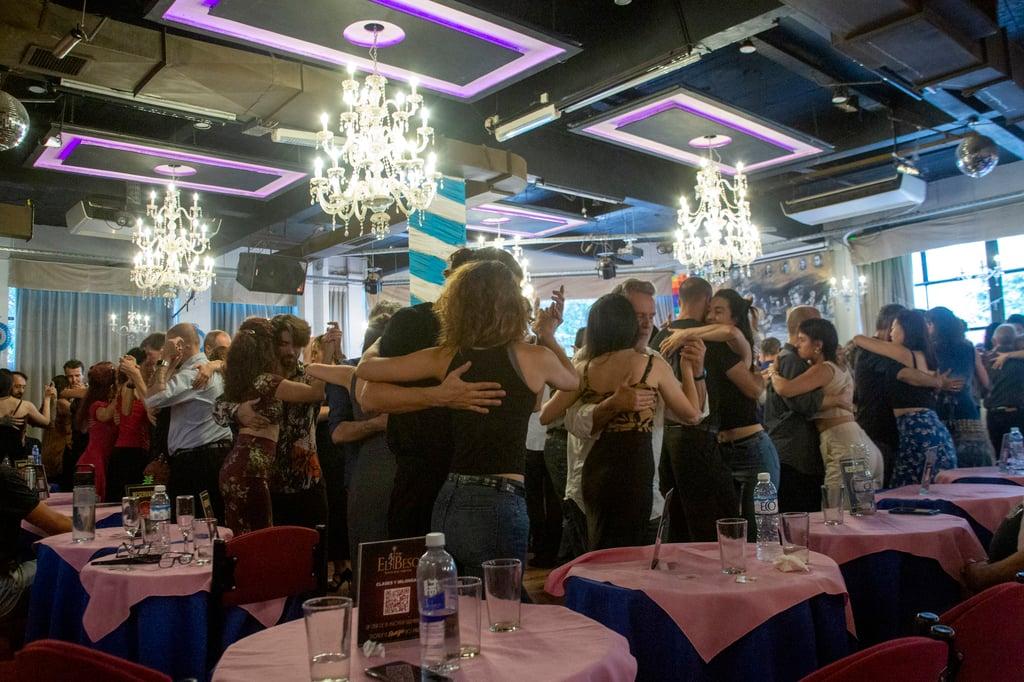
At a milonga, we share the dance floor with many other couples. The ronda — the circulating line of dance, traditionally moving anticlockwise around the floor — helps everyone move together safely and enjoyably.
Follow the flow, maintain awareness of the couples around you, and adjust your steps to the space available. Avoid overtaking, sudden changes of direction or movements that could endanger neighbouring dancers.
Before entering the floor, make eye contact with approaching dancers and wait for a suitable opening. Once you’re dancing, remember that keeping the ronda flowing is more important than completing a particular sequence.
Good floorcraft isn’t just good technique. It’s one of the clearest expressions of respect for your fellow dancers.
04 — Respect the shared experience
A milonga has its own rhythm, shaped by the music and by traditions that help everyone enjoy the evening.
Music is usually played in tandas — groups of songs with a common musical character — separated by short musical interludes called cortinas. Traditionally, dancers share a tanda with one partner, then leave the floor together during the cortina.
Enter and leave the dance floor thoughtfully, avoid unnecessary interruptions, and be considerate of those around you.
Above all, remember that a milonga is a social dance event, not a classroom or a practice session. Enjoy the music, the embrace and the shared experience.
05 — Look after each other
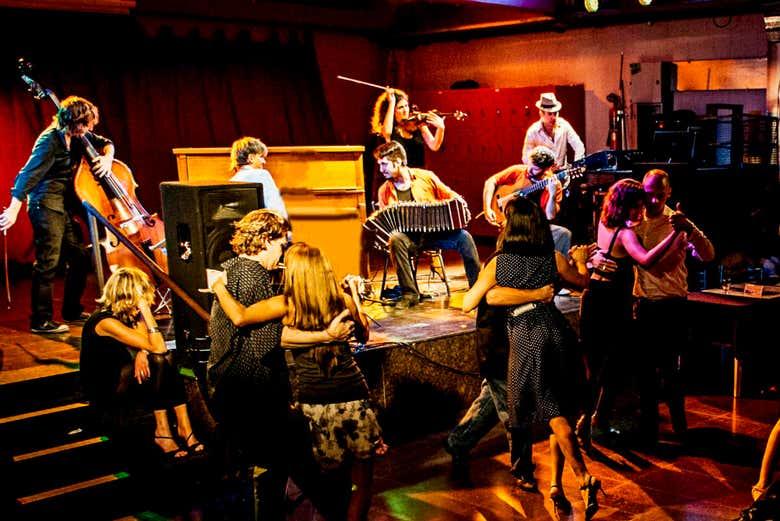
Tango brings people together, often in a close embrace, so small acts of consideration can make a significant difference to everyone’s enjoyment.
Good personal hygiene, fresh breath and clean clothing are simple but important courtesies. Use perfume or cologne sparingly, remembering that strong fragrances can be uncomfortable for others.
Courtesy extends beyond the dance floor. Be welcoming to newcomers, considerate of different experience levels, and respectful of everyone’s personal space and choices.
A great milonga isn’t defined only by the music or the dancing. It’s also the atmosphere we create together — one where people feel comfortable, included and happy to return.
Milonga Etiquette at a Glance
Want to keep these principles handy? Download our beautifully illustrated, one-page guide to milonga etiquette. Save it to your phone, share it with friends, or print a copy.